If you are tired of planning your life around regrowth, the real question is not whether hair removal works – it is how often you want to repeat it. In the debate over laser hair removal vs waxing, the biggest difference is simple: waxing removes hair for the moment, while laser treatment is designed to reduce how much hair comes back over time.
That distinction matters more than most people expect. A method can seem cheaper, faster, or easier in a single session, then become expensive and inconvenient once you factor in months or years of maintenance. For anyone comparing long-term value, comfort, and control, this is where the decision gets clearer.
Laser hair removal vs waxing: the core difference
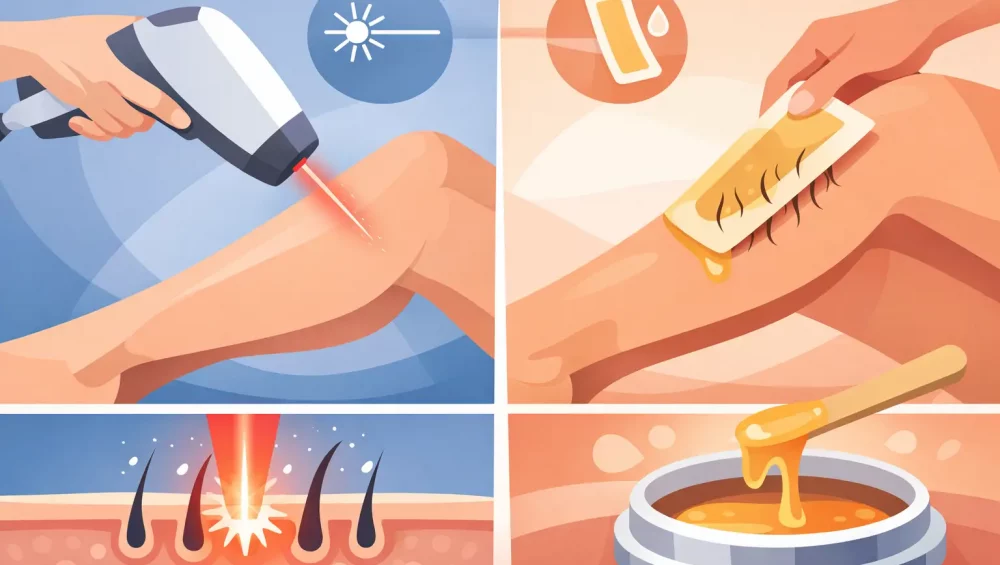
Waxing pulls hair out from the root. The follicle remains active, which means the hair grows back and the cycle starts again. Depending on the area and your natural growth pattern, that usually means booking another appointment or doing another at-home session within a few weeks.
Laser hair removal works differently. It targets pigment in the hair and delivers light energy down to the follicle, where heat disrupts future growth. That is why laser is considered a hair reduction method rather than a temporary removal method. You do not get the same all-at-once result as waxing after every session, but you are working toward less hair, finer regrowth, and fewer treatments over time.
For people who are frustrated by constant upkeep, this is the key trade-off. Waxing gives immediate smoothness. Laser changes the pattern of regrowth.
What results look like over time
Waxing is familiar because the result is obvious right away. Hair is removed from the surface and root, so skin feels smooth once the treatment is done. The downside is that you are always waiting for the next growth cycle. Hair returns, and in many cases it returns with the same density and texture as before.
Laser requires more patience at the start, because hair grows in cycles and only certain follicles respond at the ideal stage. After a series of treatments, many users notice that regrowth slows down, patches become sparse, and the hair that does come back often feels finer. This is the reason laser appeals to people who want a lower-maintenance routine, not just a short break from shaving.
It is also why device quality matters. High-output diode-based systems are built to deliver energy more effectively to the follicle than many low-spec beauty gadgets. That difference can influence how efficiently you move from repeated treatments to visible reduction.
Cost is not just the session price
Waxing often looks more affordable because each appointment is relatively straightforward. But waxing is a recurring expense by design. If you wax legs, underarms, bikini, face, or multiple areas year-round, the annual total can become significant very quickly.
Laser usually asks for a higher upfront investment. Professional clinic treatments are priced per session and per area, which can add up fast. At-home laser devices shift that equation. Instead of paying over and over for salon visits, you buy the technology once and treat on your own schedule.
This is where long-term economics favor laser for many buyers. If your goal is years of smoother skin with fewer appointments, fewer repeat purchases, and more control, the upfront cost starts to look less like a splurge and more like a practical decision.
Which one hurts more?
Pain is personal, but waxing has a reputation for a reason. It removes multiple hairs at once by force, which can make sensitive areas especially uncomfortable. Some people tolerate it well, others dread every appointment, and very few would call it relaxing.
Laser feels different. Most users describe it as warmth, a quick snap, or a brief prickling sensation rather than the ripping effect of wax. Sensation varies by device power, treatment area, skin sensitivity, and cooling or safety features. In a well-designed system, the goal is to deliver enough energy for effective treatment while keeping the experience manageable.
If comfort is your deciding factor, there is no universal answer. Some people prefer one sharp waxing pull over a series of laser pulses. Others would take short bursts of heat over repeated ripping every month. But for many users, laser becomes easier to live with because the process is moving toward less hair instead of repeating the same discomfort indefinitely.
Convenience and privacy matter more than people admit
Waxing demands timing. Hair has to be long enough for wax to grip, which means living through visible regrowth before your next session. That is manageable for some areas and frustrating for others, especially if you prefer consistently smooth skin.
Laser treatment typically works best on shaved skin, not grown-out hair. That means you are not waiting around for enough regrowth to make the method possible. It also means you can fit treatments around your own routine instead of around salon availability.
For many consumers, this is the turning point. Privacy, flexibility, and independence are not small perks. They are the reason home-use beauty technology has become such a strong category. A credible at-home laser device gives you clinic-style logic with home-level convenience – no commute, no appointment calendar, no repeated exposure of personal treatment areas to someone else.
Skin response and side effects
Waxing can leave temporary redness, irritation, and sensitivity. It may also contribute to ingrown hairs, especially in areas where hair is coarse or curly. Repeated pulling can be rough on reactive skin, and the irritation tends to return every time you repeat the process.
Laser treatment also requires care. Temporary redness or mild sensitivity can happen after a session, and safe use depends on following instructions, respecting treatment intervals, and choosing a device appropriate for your skin tone and hair color. Because laser targets pigment, results and suitability are not identical for everyone.
This is one area where honest expectations matter. Laser is not a one-size-fits-all solution, and neither is waxing. If your skin is highly sensitive to traction, laser may feel gentler in the long run. If your hair color or skin profile makes laser less suitable, waxing may remain your practical option. The better method depends on both biology and the quality of the technology you use.
Laser hair removal vs waxing for different goals
If you need perfectly smooth skin for an event this week, waxing may give the faster cosmetic result. It is immediate, predictable, and familiar. That makes sense when the goal is short-term polish.
If your goal is to stop thinking about hair removal so often, laser is usually the stronger fit. It is built around reduction, not repetition. That difference becomes more valuable the longer you look ahead.
People often compare the two as if they solve the same problem in the same way. They do not. Waxing solves visible hair now. Laser works on the growth process itself. If you are choosing based on lifestyle, not just a single appointment, that is a major distinction.
The at-home factor changes the comparison
The old comparison used to be salon waxing versus clinic laser. Today, the smarter comparison for many buyers is waxing versus a high-quality at-home laser device. That is because home-use laser can remove two of the biggest objections people used to have: repeated clinic costs and inconvenient scheduling.
Advanced diode-based home systems are designed to bring more serious energy delivery and longer device lifespan into a personal-use format. That matters because not all beauty devices are built equally. Consumers who want salon-grade logic at home should pay attention to engineering, diode quality, safety systems, and treatment consistency, not just marketing promises.
A brand like Lumantics speaks directly to that need by focusing on real laser technology rather than generic gadget language. For buyers who want performance, portability, and one-time ownership value, that approach makes the category much easier to trust.
So which one should you choose?
Choose waxing if you want an immediate result, do not mind regular upkeep, and are comfortable paying again and again for temporary smoothness. It still has a place, especially for people who want a quick fix or are not ready to commit to a treatment schedule.
Choose laser if you are thinking beyond the next few weeks. It makes more sense for people who want fewer appointments, lower long-term costs, more privacy, and a real path toward reduced regrowth. The right device will not just remove hair – it will reduce the need to keep fighting the same cycle.
The best hair removal method is the one that fits your real life, not just your next appointment. If recurring waxing has started to feel like maintenance without progress, that is usually a sign you are ready for a technology built for long-term change.